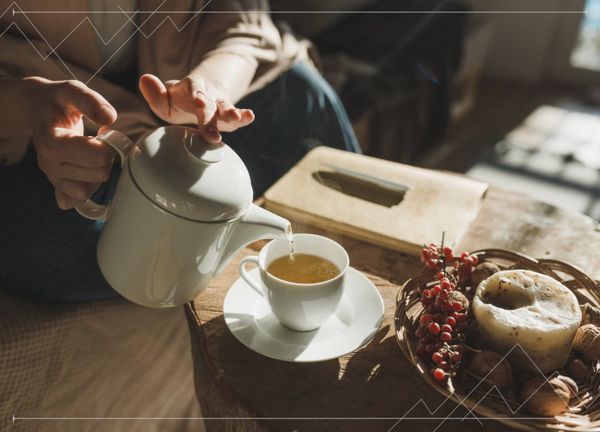
I see her walking toward me, and I know exactly who she is. Not because I've met her before, but because I've been waiting my whole life for this moment. I pour tea into the rose-patterned cup I've been saving, and when she sits down across from me, I say:
"It's good to see you. I've been waiting."
She takes the cup, wraps her hands around it like she's been cold for years, and says:
"It's good to be here. I've been waiting for you too."
This was the start of a conversation with a version of myself I had dismissed for decades, who I only let surface after a few years of slow, uncomfortable work. Finding her and speaking to her was a homecoming because I knew her, and she knew me.
I’d spent years treating her like someone I’d outgrown. Someone I needed to move past in order to become whoever I was supposed to be next. And I never questioned that impulse, because everything around me confirmed it — that growth meant leaving previous versions of yourself behind, that holding on was the same as staying stuck.
It wasn’t until I sat across from her that I realized I hadn’t outgrown her at all. I’d abandoned her. And that abandonment wasn’t growth. It was the cost of believing a story I’d never actually examined.
The Story I Stopped Believing
It's the story self-help has been telling for decades — become someone entirely new, shed your old self like snakeskin. We're supposed to celebrate reinvention, to speak in metaphors of butterflies and phoenixes rising from ashes. Women get sold this narrative hard. We socially celebrate women who say they’re “not the same person” they were five years ago, as if continuity were failure, as if carrying pieces of who we’ve been were a sign we haven’t done the work.
I used to think this way too. Each phase of my life felt like a complete reinvention, like I was becoming someone entirely new who had little in common with the woman who came before. Somewhere along the way, I bought into the idea that growth meant erasure. That to evolve, I had to kill off previous versions of myself.
But something changed when I slowed down long enough to notice what I’d actually been doing. The healthy choices I’m making now feel foreign in my own body, not because I’m becoming someone else, but because I’m finally treating myself like someone worthy of care. And that recognition changes everything about the premise.
The Parts That Were Never Meant to Be Left Behind
Think about the parts of yourself you’ve been taught to leave behind. The destructive part. The messy part. The part that burns bridges and makes choices that hurt people, including yourself. The part that’s selfish, that’s too much, that doesn’t fit into polite society’s expectations of who you should be.
We’re told these parts are obstacles to our growth, that transformation means becoming someone who would never act that way again. But the woman who burns bridges when she’s scared isn’t someone to be ashamed of. She’s someone who learned how to protect herself, even if her methods are clumsy. The selfish part that puts her needs first isn’t the enemy. She’s the one who knows you deserve to take up space.
Integration doesn’t mean letting these parts run wild. It means having enough space inside yourself to hold them without letting them drive every decision. It means recognizing that the capacity for destruction is also the capacity for powerful change, and that the selfishness you’re ashamed of might be the only thing that’s kept you alive. This isn’t about making excuses for harmful behavior. You can’t actually heal what you refuse to acknowledge exists.
Wholeness Feels Strange When You’ve Only Known Fragments
The strangest part of where I am now isn’t that I don’t recognize this version of myself. It’s that I do recognize her, and she feels like home, and that’s what’s so disorienting. For years, I’ve been fragments. The professional me, the creative me, the wounded me, and the wise me. I thought growth meant choosing which fragment to develop, which one to become. When you’ve spent decades only accessing pieces of who you are, wholeness feels foreign. When you’ve been abandoning yourself for so long, treating yourself with care feels like putting on someone else’s clothes.
The healthy behavior feels strange because it belongs to the part of me I never thought I deserved to be. I feel as women, we love transformation stories because they’re clean. These stories promise that if we just work hard enough, suffer enough, do enough therapy or read enough books, we can become someone who never struggles the way we used to. Real growth is messier than that.
Imagine you’ve been living in a tiny apartment for years, cramming all your belongings into impossible spaces, leaving most of your books in boxes because there’s no room for them. Then suddenly you move into a house with enough space for everything you own.
At first it feels strange — all this room, all these books you’d forgotten you had, all these parts of yourself that can finally stretch out and be seen. You didn’t become someone new. You finally have room to be fully who you’ve always been.
The Woman With the Rose-Patterned Cup
That woman sitting across from me? She’s not my future self. She’s not some integrated, perfected version of who I might become. She’s the me who finally stopped trying to choose between parts of herself.
She’s the one who learned that you can be analytical and creative, that you can crave deep work and playful destruction, that you can want roots and movement, stability and adventure all at once. She’s been waiting for me to stop trying to make a neat story out of my life. To stop needing my growth to make sense to anyone else. To stop abandoning parts of myself in the name of transformation.
Growth isn’t about shedding. It’s about expansion — increasing your capacity to hold complexity without breaking, learning to contain contradictions instead of choosing between them. The parts of yourself you thought you’d outgrown aren’t embarrassing remnants of who you used to be. They’re foundations for who you’re becoming.
Written by